Dubai's real estate market delivered its fourth consecutive year of record transaction volumes in 2024. More than 180,000 residential transactions were registered - a figure that surpasses every prior year in the emirate's history and that places Dubai ahead of most comparable global cities in absolute deal count. The headline numbers mask a more interesting structural story: the off-plan market, which now accounts for over 60% of all residential transactions, has matured from a speculative frontier into a sophisticated asset class with institutional-grade developer ecosystems, regulated payment structures, and increasingly robust secondary market liquidity.
For international investors evaluating Dubai in 2025, the question is no longer whether the market works - it demonstrably does - but how to navigate it intelligently: which zones, which developers, which payment structures, and which end-game best suits a given portfolio objective. This guide addresses each of those questions directly.
Why Dubai Remains Structurally Attractive
Dubai's investment case rests on a set of structural fundamentals that are unlikely to change across any medium-term horizon. Understanding these pillars is the prerequisite for evaluating any specific opportunity within the market.
Zero Tax Environment
There is no income tax, no capital gains tax, and no inheritance tax in the UAE on property or personal income. Rental income from Dubai property is not subject to UAE taxation. For international buyers - particularly those from high-tax jurisdictions - this tax environment represents a structural return advantage over virtually every comparable market globally. A gross yield of 6.5% in Dubai translates to a net yield of 6.5%; the same gross yield in the UK, France, or Australia would net 3.5–4.5% after tax.
Golden Visa Linked to Property
The UAE's 10-year Golden Visa is available to property investors who acquire completed (ready) property with a minimum value of AED 2 million (approximately €500,000). The visa grants the holder and their immediate family the right to reside, work, and travel freely using UAE residency, without any minimum stay requirement. For buyers who are also motivated by residency flexibility - the ability to establish UAE tax residency, access the UAE banking system, or hold UAE residency as a strategic asset - the Golden Visa transforms what might otherwise be a straightforward yield investment into a comprehensive lifestyle and wealth planning instrument.
Depth of Liquidity
Dubai's property market is remarkable for its liquidity relative to other global luxury destinations. The combination of a large, internationally diverse buyer pool, no restrictions on foreign ownership in freehold zones, and a sophisticated brokerage ecosystem means that resale periods for well-positioned properties are measured in weeks to months rather than quarters to years. This liquidity reduces execution risk for investors who need flexibility and increases the effective risk-adjusted return of Dubai assets relative to less liquid comparable markets.
The Off-Plan Market: How It Works
Off-plan in Dubai refers to the purchase of property that has not yet been built, or is under construction at time of sale. The developer launches a project, establishes a payment plan, and buyers reserve units - typically with a 10–20% booking deposit - with the balance paid in stages tied to construction milestones, and the final 20–30% due on completion.
This payment structure creates an inherent leverage effect without the interest cost of mortgage financing: a buyer who pays 20% upfront and holds through a 2-year construction period to completion has effectively deployed 20% of the purchase price while controlling 100% of the asset's price exposure. In a market that has appreciated 15–25% in prime zones since 2022, this leverage profile has generated exceptional returns for early-entry investors.
RERA Escrow Protection
Dubai's Real Estate Regulatory Authority (RERA) mandates that all off-plan sales proceeds be held in an escrow account that is released to the developer only as verifiable construction milestones are completed. This regulation - introduced following the 2009 crisis when several developers failed to complete projects - substantially reduces the counterparty risk that characterised early Dubai off-plan investment. Reputable developers are 100% compliant; buyers should verify escrow registration and milestone linkage before proceeding with any off-plan purchase.
Prime Zones: A Zone-by-Zone Guide
Dubai Marina & JBR
Dubai Marina remains the most internationally liquid submarket in Dubai: a 3-kilometre canal development ringed by high-rise residential towers with direct beach access at Jumeirah Beach Residence. The zone caters to a broad spectrum of buyers - from entry-level studios at AED 800,000 to full-floor penthouses at AED 15 million - and supports the deepest secondary market resale liquidity of any Dubai district. Gross rental yields typically run 6.5–8% on studios and one-bedroom units. The zone's maturity means that off-plan opportunities within the existing marina footprint are limited; most new launches are positioned in adjacent areas such as Dubai Harbour and Bluewaters Island, which are effectively extensions of the Marina ecosystem.
Downtown Dubai & Business Bay
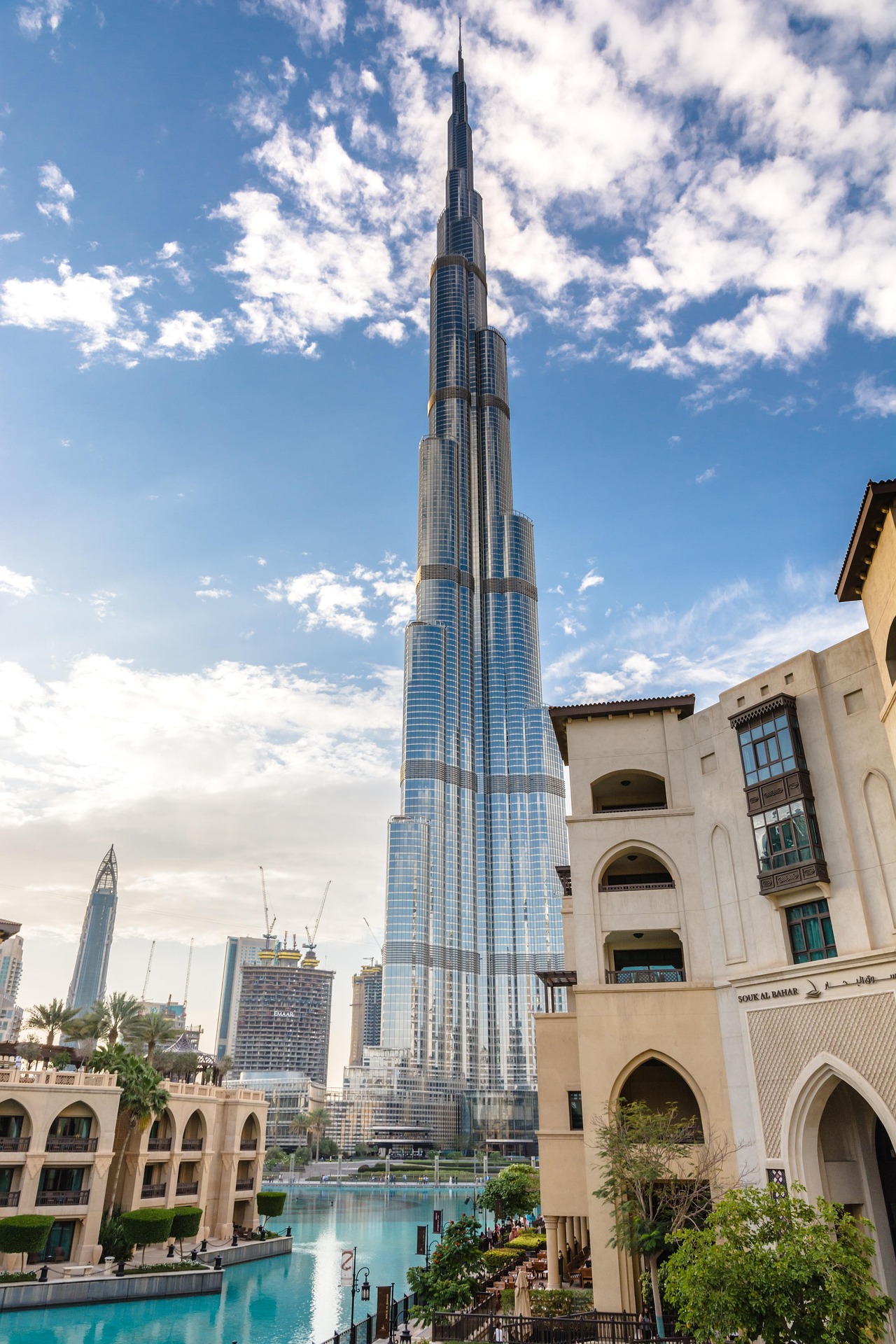
Downtown Dubai - anchored by the Burj Khalifa and Dubai Mall - commands premium pricing reflective of its iconic status: AED 2,500–4,500 per square foot in branded residences and tower podiums adjacent to the Khalifa. Capital appreciation in this zone has outperformed most of Dubai since 2020, driven by a combination of ultra-HNW demand for trophy addresses and a finite supply of units within the core Emaar development zone. Business Bay - immediately adjacent and increasingly indistinguishable from Downtown in terms of lifestyle amenity - offers 15–20% lower entry prices with comparable yield profiles, making it the value-play alternative for buyers priced out of Downtown proper.
Palm Jumeirah
The Palm remains Dubai's most recognisable luxury address and the zone most associated with the global luxury buyer. Villa prices on the Palm's fronds now start at AED 10 million and reach AED 80 million+ for signature properties on the trunk and crown. The Palm Jumeirah ultra-luxury villa market - defined as properties above AED 20 million - has been one of the world's fastest appreciating luxury residential asset classes since 2021, driven by relocation demand from Russian, European, and Gulf HNWIs. For investors, the Palm also supports robust short-term rental yields through DTCM-regulated holiday homes, with premium beachfront villas achieving AED 80,000–150,000 per week in peak season.
Dubai Hills & Emerging Communities
Dubai Hills Estate - a master-planned community built around an 18-hole Hyder Consulting-designed golf course, with direct highway connectivity to Downtown and the airport - represents the dominant value proposition in Dubai's mid-to-premium villa market. Villas at AED 3–12 million on golf course plots have appreciated substantially since 2020 and continue to attract families relocating from Europe and the Americas who prioritise community amenity, school access, and green space over centrality. Further afield, communities such as Dubai South (adjacent to Al Maktoum International Airport), Damac Hills, and the emerging Mohammed Bin Rashid City offer lower entry points with a higher risk-reward profile tied to infrastructure development timelines.
"Dubai doesn't just offer yield - it offers a complete reinvention of what a global city can be, and international capital is repricing that ambition accordingly."
Yield Benchmarks by Zone and Asset Type
| Zone | Asset Type | Gross Yield | Price Range (AED) |
|---|---|---|---|
| Dubai Marina | Studio / 1BR | 7–9% | 800K – 2.5M |
| Downtown Dubai | 1–2BR Apartment | 5.5–7% | 1.8M – 6M |
| Business Bay | 1–2BR Apartment | 6–8% | 1.2M – 4M |
| Palm Jumeirah | Villa (frond) | 4–6% | 10M – 50M |
| Dubai Hills | Villa (golf course) | 4.5–6% | 3M – 15M |
These yield figures represent gross rental income as a percentage of purchase price, assuming standard short-term or holiday-home rental strategies managed by licensed DTCM operators. Net yields - after service charges (which vary from AED 8–28 per square foot depending on community), management fees (typically 20–25% of gross rent), and minor maintenance - typically run 1.5–2.5% lower than gross figures. Even after these deductions, net yields of 4.5–6.5% in prime Dubai zones compare favourably with any comparable global luxury market on a post-tax basis.
Key Risks and How to Mitigate Them
No investment market is without risk, and Dubai is no exception. Buyers who approach the market with a clear-eyed assessment of the principal risk factors - and who take the steps available to mitigate them - are substantially better positioned than those who rely on the headline enthusiasm that currently characterises much of Dubai's marketing.
Developer Risk
The quality of Dubai's developer ecosystem varies significantly. The major listed developers - Emaar, Aldar, Damac, Meraas - operate at institutional grade with professional project management, RERA-compliant escrow, and completion track records that span multiple cycles. Smaller developers, while not inherently problematic, carry higher execution risk and warrant additional due diligence on balance sheet strength, prior completions, and escrow compliance. Buyer's counsel should independently verify RERA registration, escrow account status, and developer financials before any off-plan commitment.
Supply Pipeline
Dubai has a history of supply cycles: large pipeline delivery can temporarily suppress rental yields and resale prices in specific zones. The current pipeline - particularly in Business Bay, JVC, and Dubai South - is substantial. Investors whose return case depends primarily on rental yield should focus on submarkets with lower supply additions relative to demonstrated demand depth. The Marina, Downtown, and Palm Jumeirah are structurally better insulated from oversupply risk than emerging communities.
Currency Exposure
The AED is pegged to the USD at a fixed rate of 3.6725 - a peg that has been maintained since 1997 and is backed by substantial UAE foreign exchange reserves. For euro-denominated investors, the USD/EUR relationship introduces currency exposure: a strengthening euro (or equivalently, a weakening dollar) reduces the AED-denominated return in euro terms. Buyers acquiring primarily for Golden Visa purposes or long-term UAE residency are largely insensitive to this; yield-focused investors with euro liabilities should factor FX scenarios into their return modelling.
Access Dubai's Best Off-Plan Opportunities
Our Dubai advisors work directly with Emaar, Aldar, Damac, and a curated selection of boutique developers to source pre-launch allocations and priority access to the most in-demand projects - before they reach the public market.
Request a Private Consultation